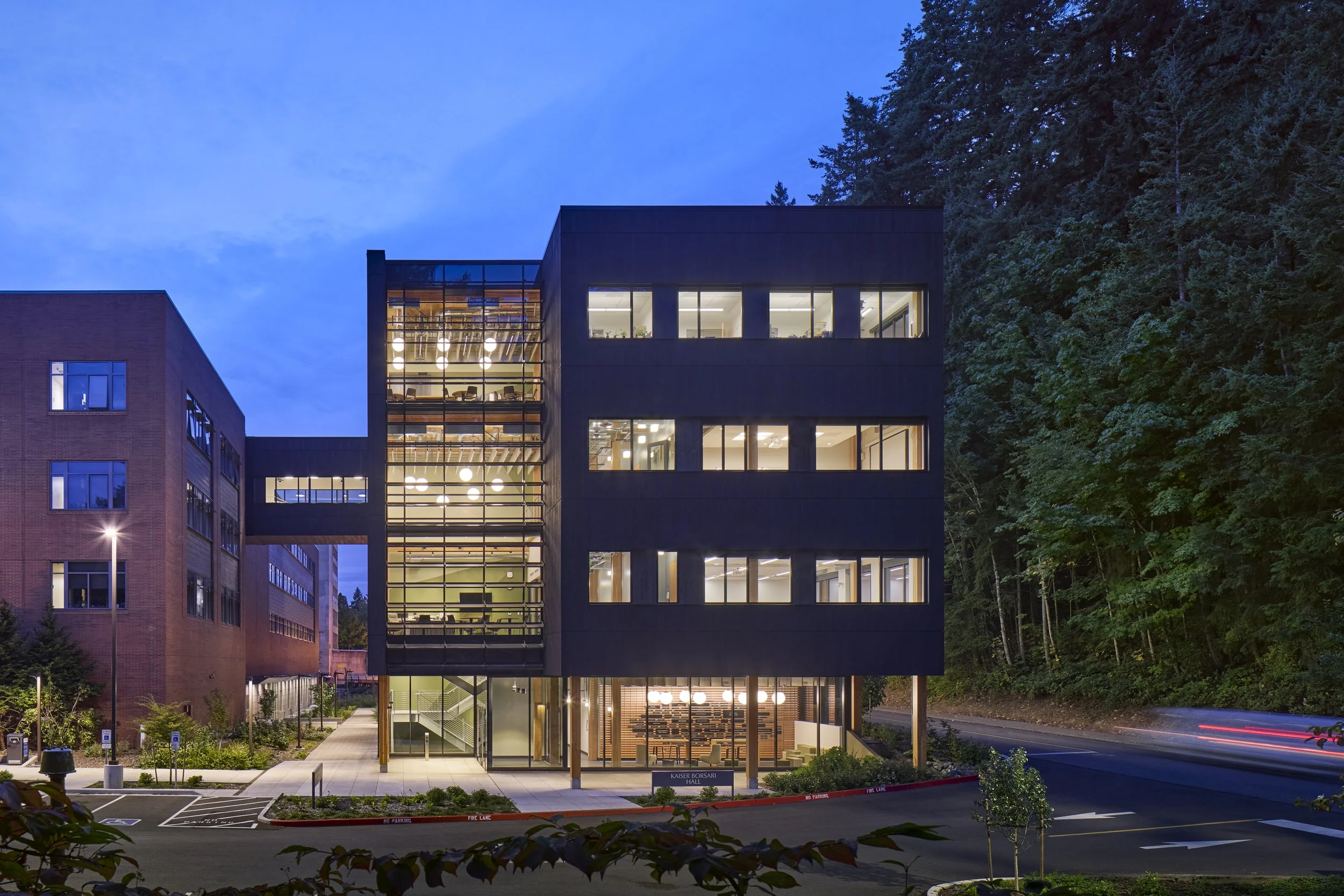
WWU Kaiser Borsari Hall
As the first U.S. higher-education STEM building to achieve both Zero Energy and Zero Carbon certifications, Kaiser Borsari Hall is a high-performance beacon of sustainability. The facility achieves a 100 percent reduction in operational carbon and an 82 percent reduction in energy use below the WSEC baseline.
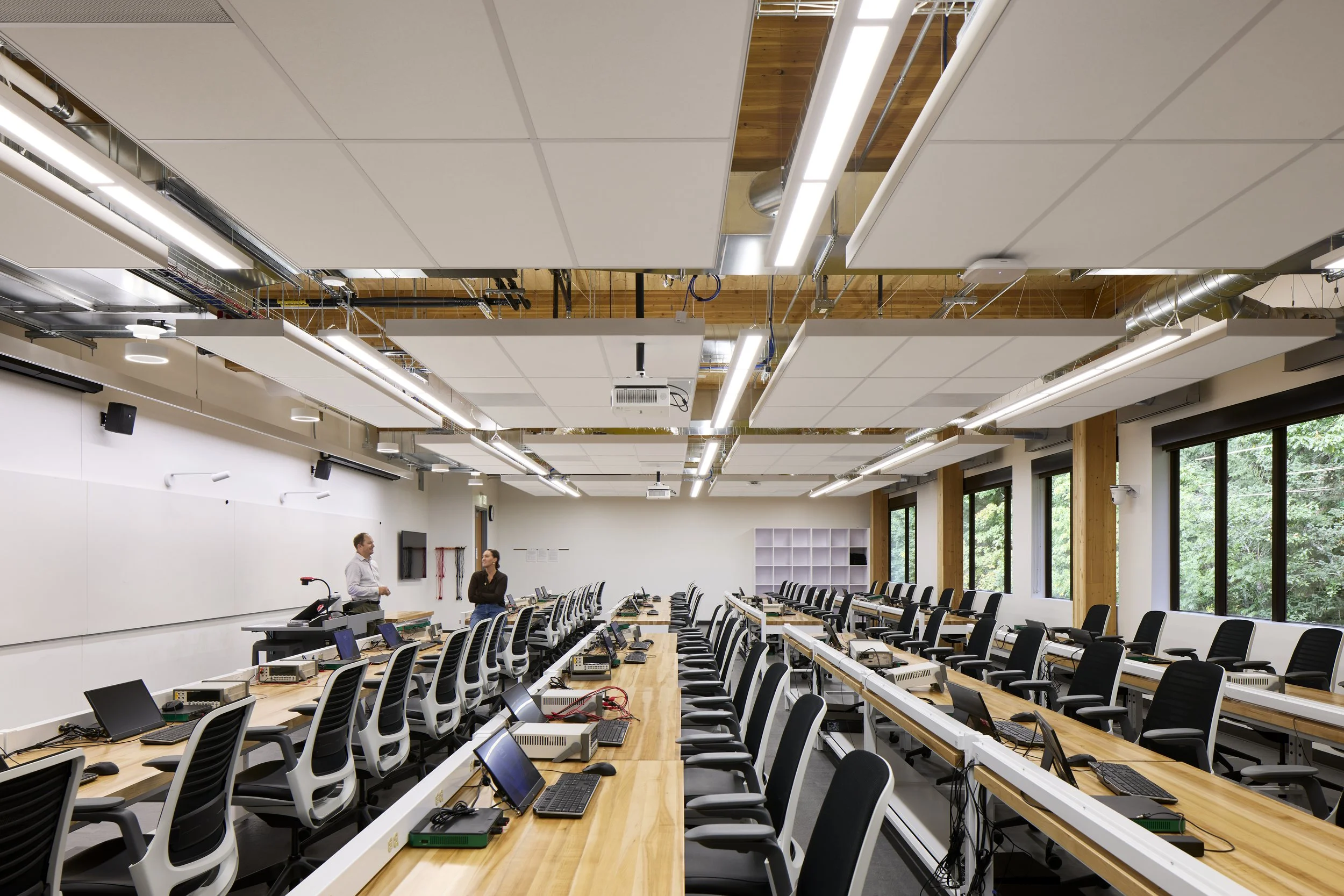
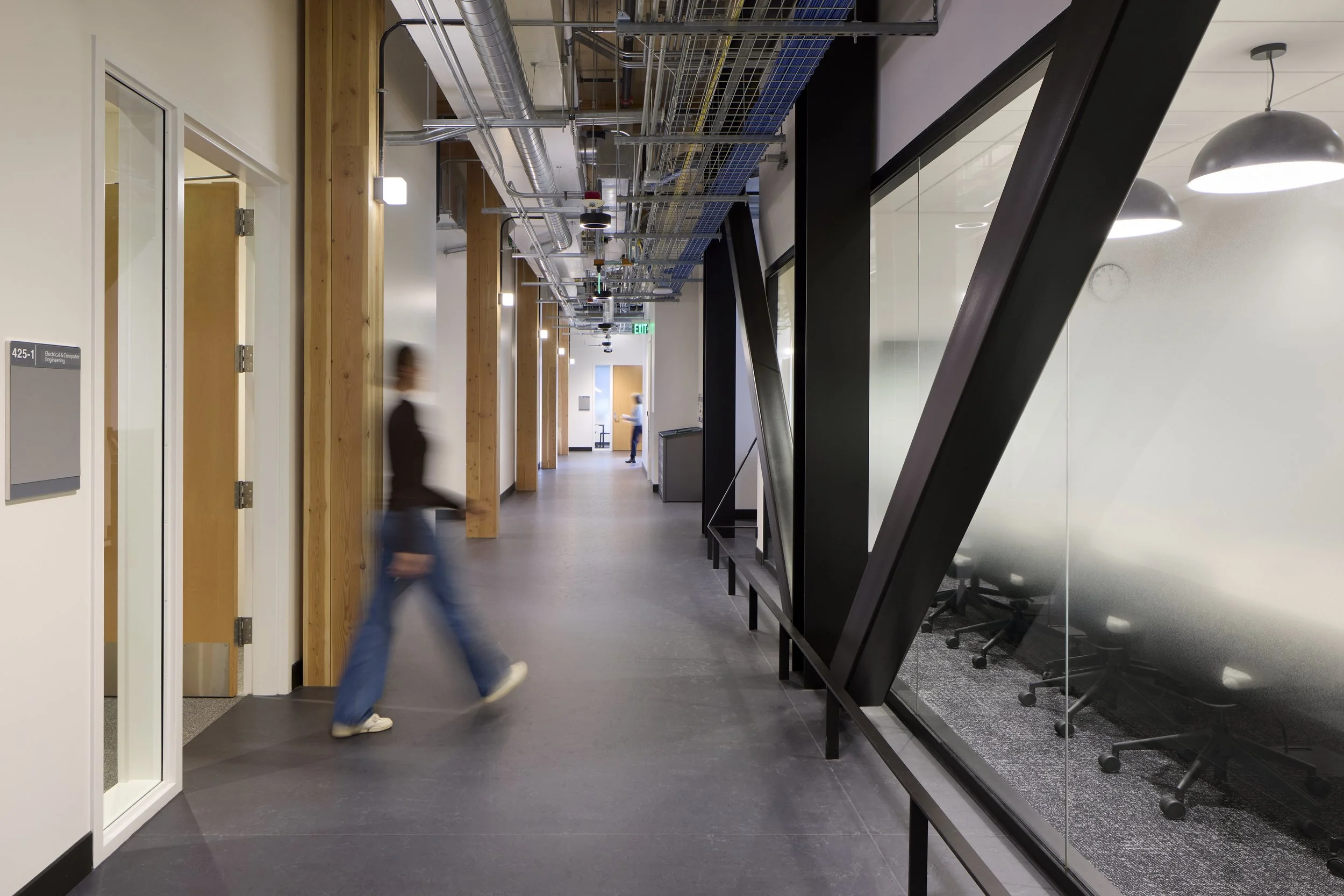
The primary challenge was designing lighting for rigorous Electrical Engineering and Computer Science programs while adhering to aggressive energy goals. This required intense cross-discipline coordination to integrate infrastructure within an exposed mass timber structure. Achieving a clean ceiling demanded precise spatial mapping with structural and mechanical teams to ensure conduit and hardware remained concealed or aligned with the timber geometry. This success was predicated on an exceptional level of team trust; by fostering mutual respect between the design team and contractors, the project transcended typical silos to ensure technical precision.
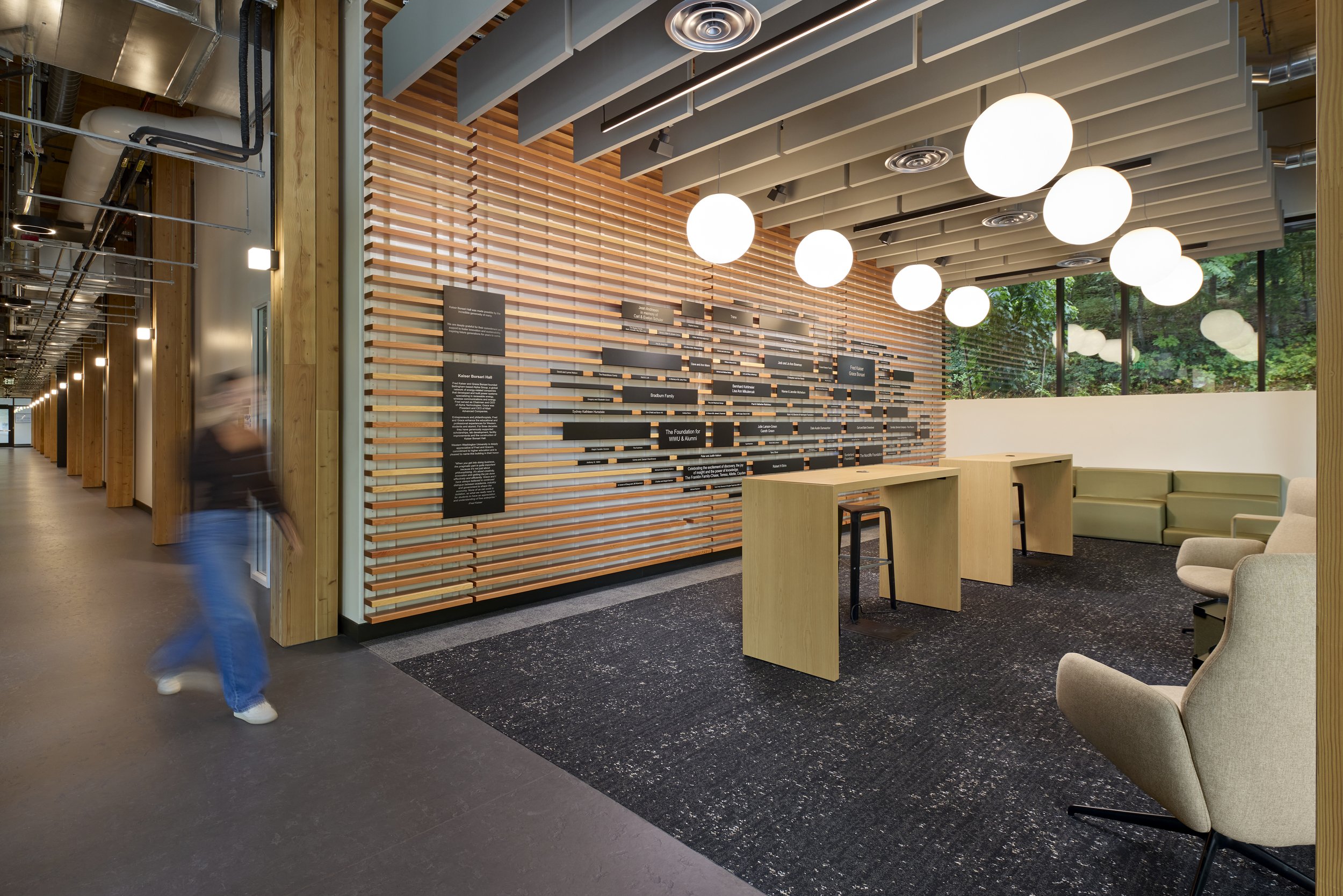
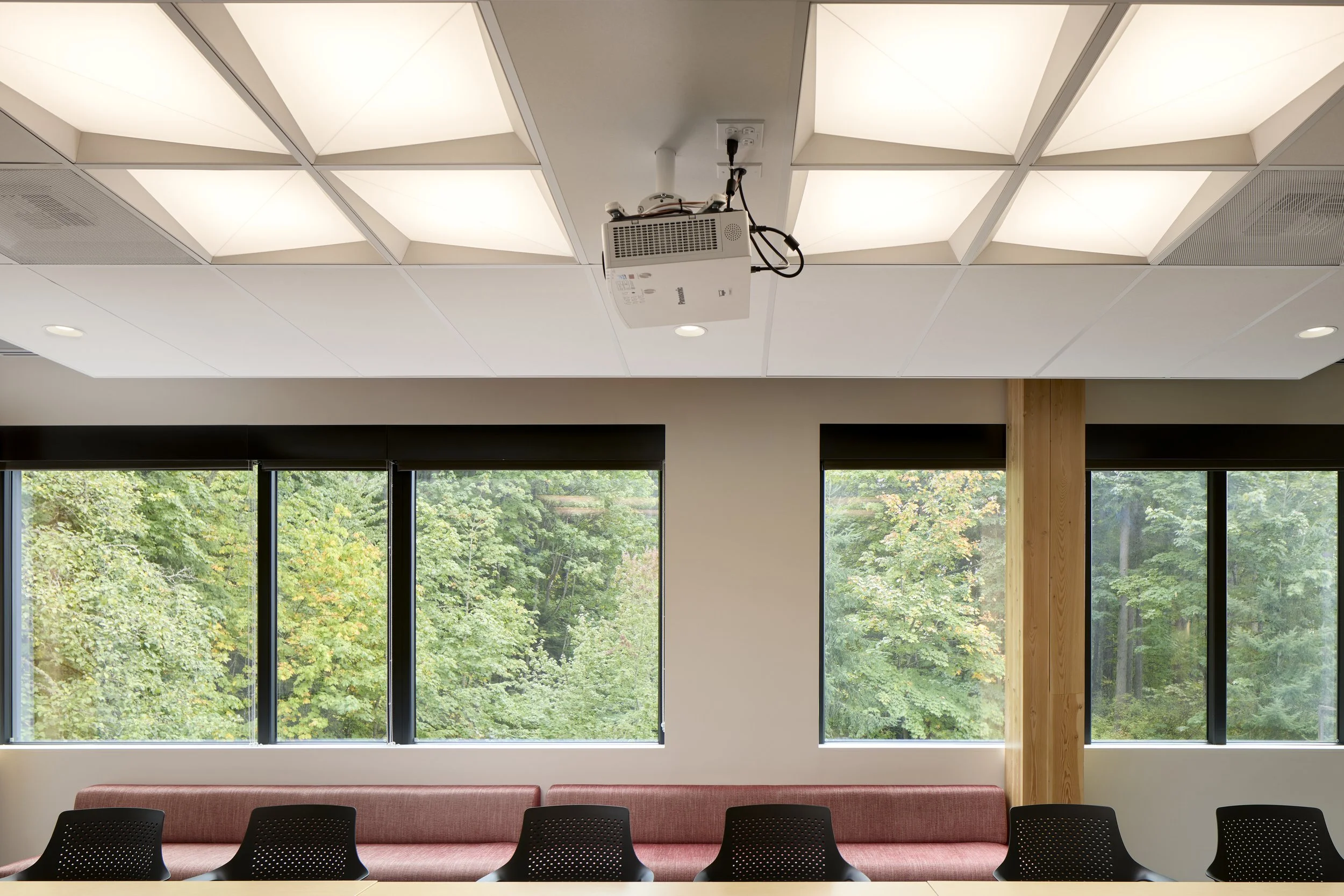
The lighting concept emphasizes transparency through a layered approach that celebrates the wood structure, which reduced embodied carbon by 63 percent compared to conventional construction. The central atrium serves as a luminous core where integrated vertical illumination defines the volume. By blurring the lines between the interior and the forest floor, the design maximizes views and wellness through expansive glazing, paired with responsive sensors that dim interior circuits as natural light permeates the wooded site. To meet Net Zero requirements, the design leverages granular controls and daylight harvesting that responds to variable sky conditions and seasonal canopy shifts. In specialized laboratories, high color-rendering LEDs ensure visual acuity, while indirect-direct distributions mitigate glare on monitors and work surfaces.
By making the lighting systems and controls visible, the design transforms the building into a living laboratory where students observe real-time energy management, proving that elite STEM environments can coexist with total decarbonization.
LOCATION
Bellingham, WA
ARCHITECT
Perkins & Will
DESIGNER
Lucrecia Blanco Zaira Trejo
_______________
2025 AIA Washington Council Civic Design Award
2025 WAN Americas Award
2023 Holcim Award for Sustainable Design Excellence